
Case Study:
Maximizing Surgical Growth by Restructuring Scheduling Models
Industry
Healthcare
Client
Operations Team
Focus Areas
Growth Strategy · Resource Management · Resource Optimization · Systems Design

Outcomes Delivered
Challange
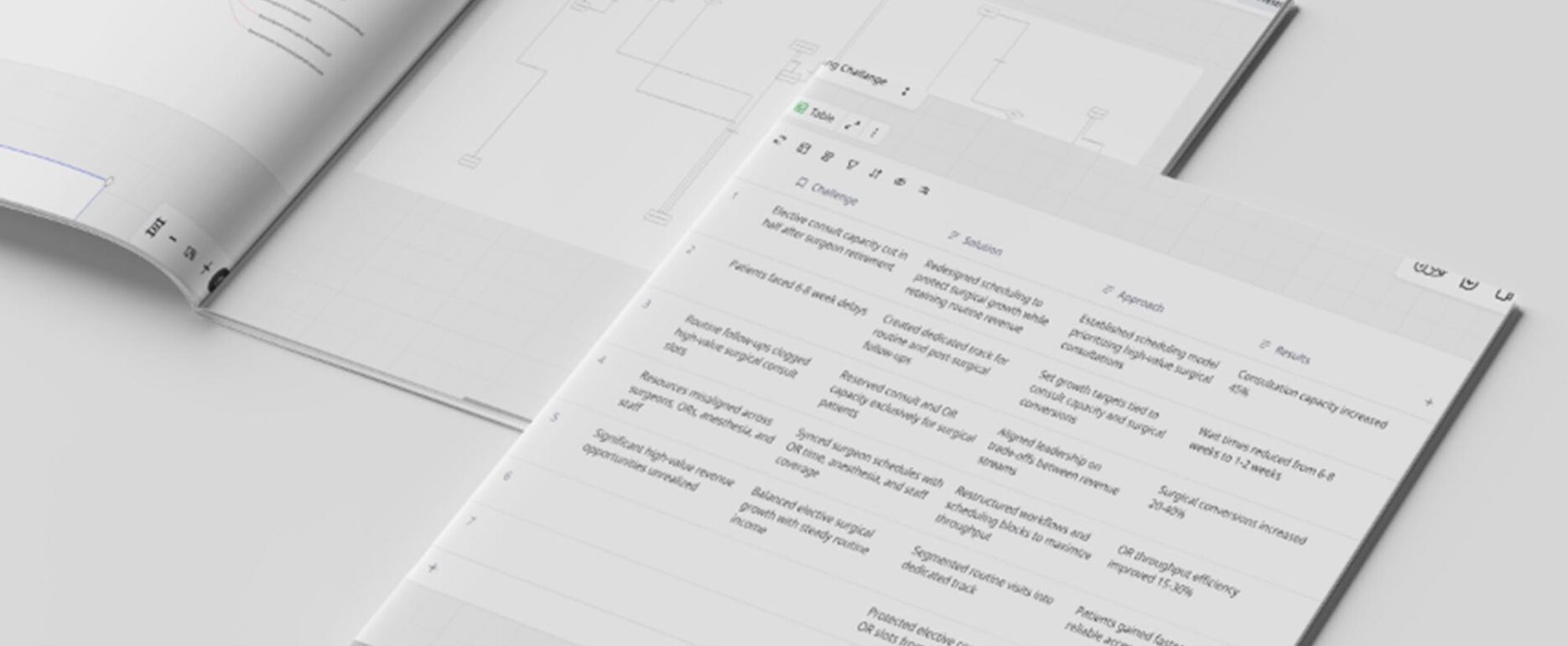
A surgical center offering both elective and routine procedures needed to maintain growth while balancing surgeon, OR, and staff resources. Following the retirement of a senior surgeon, capacity challenges created bottlenecks that threatened patient satisfaction and revenue.
Key Challenges
-
Elective consult capacity cut in half.
-
Patients waiting 6–8 weeks for appointments.
-
Routine follow-ups consume surgical consult time.
-
Misaligned resources across surgeons, ORs, anesthesia, and staff.
-
High-value revenue opportunities are going unrealized.
Solution
Redesigned scheduling to protect surgical growth while retaining routine revenue.
-
Segmentation – Created a dedicated track for routine and post-surgical follow-ups.
-
Protected Surgical Slots – Reserved consult and OR capacity exclusively for surgical patients.
-
Resource Alignment – Synced surgeon schedules with OR time, anesthesia, and staff coverage.
-
Revenue Optimization – Balanced elective surgical growth with steady routine income.
Turning Strategy into Systems
My Approach
Strategy & Alignment
Established a model that prioritized high-value surgical consultations while keeping continuity of care for routine patients.
-
Set growth targets tied to consult capacity and surgical conversions.
-
Aligned leadership on the trade-offs between elective and routine revenue streams.
Optimizing Capacity & Workflow
Redesigned workflows and scheduling blocks to maximize throughput.
-
Segmented routine visits into a dedicated track.
-
Protected elective consult and OR slots from being backfilled.
-
Synced scheduling with staff and anesthesia availability for efficiency.
Resource Alignment & Flow Management
Built buy-in across surgeons, staff, and schedulers by emphasizing shared goals.
-
Reduced staff stress with clear scheduling rules and predictable flow.
-
Improved morale by removing bottlenecks and patient complaints.
-
Reinforced a culture of alignment between clinical care and financial strategy.

Results and Impact
Quantitative Outcomes
-
Consultation capacity increased 45%.
-
Wait times reduced from 6–8 weeks → 1–2 weeks.
-
Surgical conversions increased 20–40%.
-
OR throughput efficiency improved 15–30%.
Qualitative Outcomes
-
Patients gained faster, more reliable access to surgical care.
-
Staff stress eased with clearer scheduling rules and predictable flow.
-
Stronger alignment between clinical priorities and financial goals.
Key Takeaway
Smart scheduling isn’t about filling calendars; it’s about unlocking capacity where it matters most. By aligning resources with strategy, the surgical center eliminated delays, boosted conversions, and turned a major bottleneck into a reliable growth engine.